Craft & Process
Ingredients
/
Jul 30, 2026
Why We Choose Gentle Processes
The word processed has become shorthand for something artificial, depleted or disconnected from real food.
But nearly every ingredient we eat has passed through some kind of process.
Milk is cooled. Meat is cut. Broth is simmered. Berries are frozen. Tallow is rendered. Even washing, drying and grinding change an ingredient from the state in which it was found.
Processing itself is not the problem.
The more useful question is: what is the process trying to accomplish?
Some processes exist primarily to make food cheaper, more uniform or easier to sell. They separate ingredients into parts, rebuild them into new forms and add what is needed to maintain a particular flavour, colour or shelf life.
Other processes are much quieter.
Their purpose is not to reinvent an ingredient, but to help carry it forward. They remove what must be removed, create stability or make seasonal nourishment available beyond the moment in which it was gathered.
The distinction is not between processed and unprocessed. It is between preservation and reconstruction.
At BORN, we look for processes that allow the original ingredient to remain recognizable. Its source should still be clear. Its natural colour, flavour, texture and variation should not need to be hidden beneath layers of correction.
The goal is not to avoid every form of intervention.
The goal is to intervene with restraint.

Freeze-drying is one example of this approach.
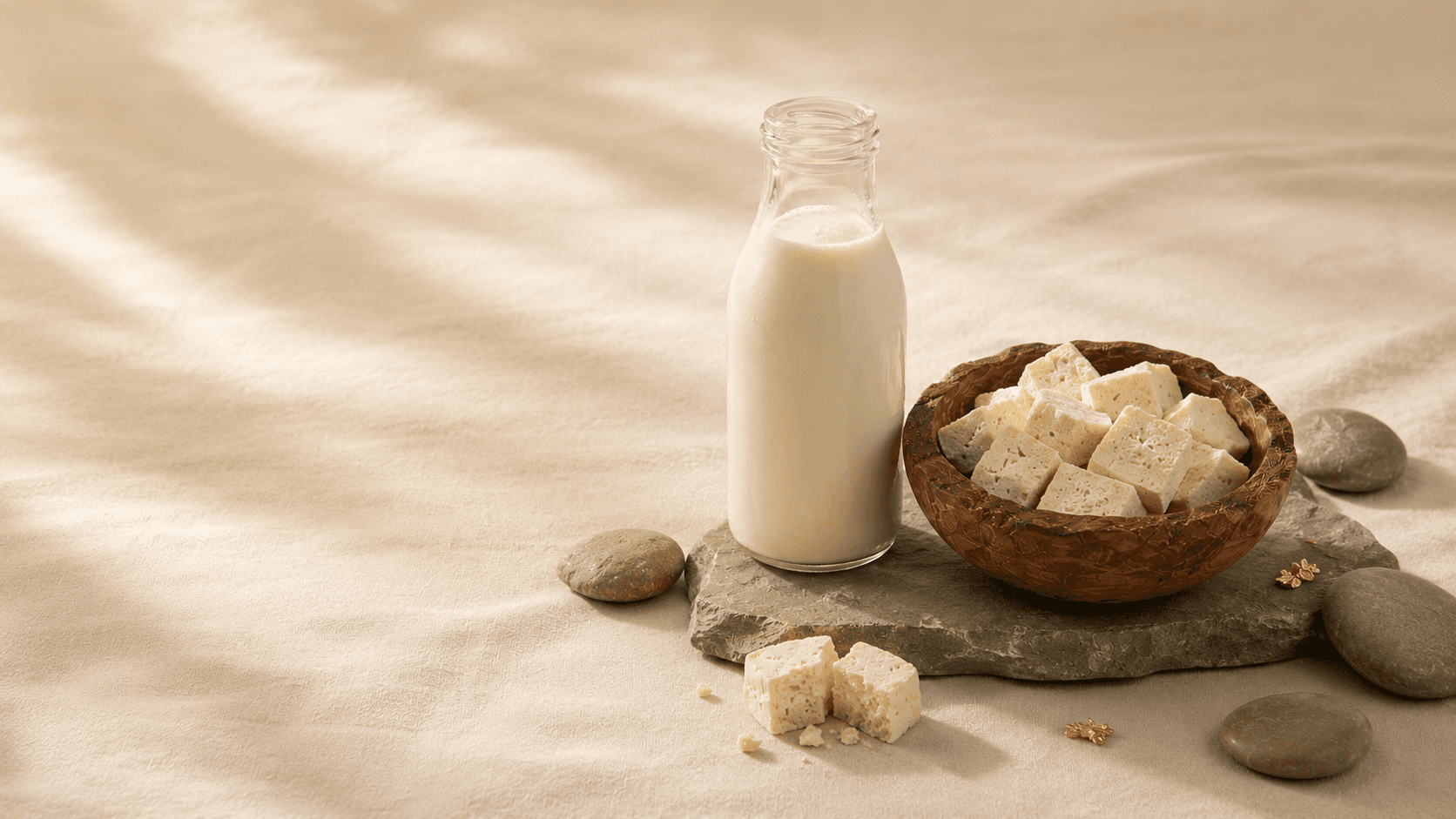
The ingredient is first frozen. Moisture is then drawn away under low pressure rather than being driven out through prolonged high heat. What remains is dry, lightweight and shelf-stable, while still carrying much of the ingredient’s recognizable structure and character.
It is not identical to the fresh ingredient, nor should it pretend to be.
Something has changed.
But the process is designed to change only what is necessary to preserve it.
That matters when working with ingredients such as raw cream and wild blueberries. Both carry qualities shaped by their source, season and natural composition. Our responsibility is not to overpower those qualities with processing. It is to handle them carefully enough that their identity remains present in the final form.
Gentle does not mean careless or primitive.
It often requires precision, patience and attention to details that industrial production is designed to eliminate. Natural ingredients vary. Temperatures shift. Texture and moisture are not always perfectly uniform. Working with those realities requires listening to the material rather than forcing it into complete sameness.
The result may carry small variations from one batch to another.
We see that as honesty, not inconsistency.
A real ingredient should be allowed to reveal something about where it came from and how it was made. If every natural difference has been removed, the finished product may be easier to standardize—but it may also be further from its source.
The BORN approach is simple: begin with something worthy of preserving, then interfere as little as the process allows.
Choose carefully.
Handle gently.
Keep the original relationship intact.
share
More to read


Follow us